

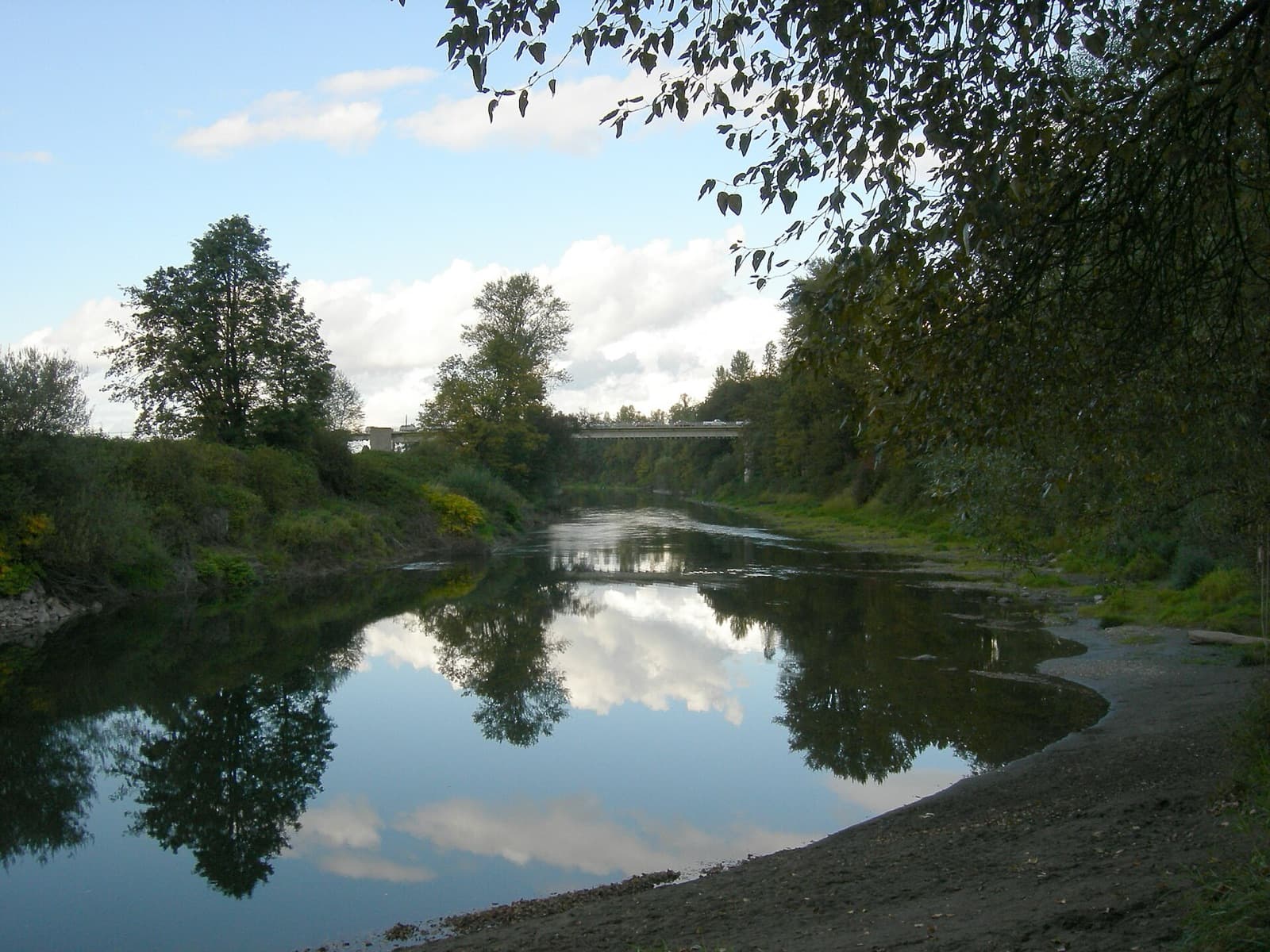
Duvall is a town that moved uphill to make room for the railroad. Duvall sits above the Snoqualmie River valley along State Route 203. OFM’s April 1, 2026 estimate counts 8,910 residents, up from 8,034 in the 2020 Census.
The town that moved
The townsite was once the hillside homestead of Francis and James Duvall in the 1870s, HistoryLink writes. The original town, Cherry Valley, sat about half a mile away along the Snoqualmie River. Around 1909 and 1910, when the Great Northern and the Chicago, Milwaukee and St. Paul railroads planned a line along the river, the railroad agreed to move Cherry Valley, and homes and businesses were moved south and up the hill. HistoryLink identifies Hix Market and the Grange Hall among the buildings moved with the town.
The relocated town was briefly named Cosgrove before becoming Duvall. HistoryLink writes that promoters advertised lots for $25 each, calling Duvall “the town with a big future,” and that the first mayor, Lon Brown, also played in the town band. Duvall voted 148 to 17 for incorporation on December 30, 1912, and became a town on January 6, 1913.
Depot Park and the farmstead
The railroad shaped the town’s landmarks. HistoryLink records that Ray Burhen bought the train depot in 1955, later donated it to the city, and that it was moved to Depot Park. The last train through Duvall ran in 1973. The city’s park directory lists Depot Park with parking and restrooms, Big Rock Park with its rock and trees, and the Dougherty Farmstead, a historic farmstead on NE Cherry Valley Road.
Duvall Days
Duvall Days is an annual June festival centered on Main Street. The 2026 celebration was June 6, with a parade, live music and vendors.
Living here
Duvall picked itself up and moved for the railroad in 1910, and Main Street still carries the town’s June parade. Chase Hedin is a Managing Broker who works out of Woodinville. Curious how Duvall compares with Carnation or Woodinville, or getting ready to sell? Let’s talk. Start a conversation · What’s my home worth?